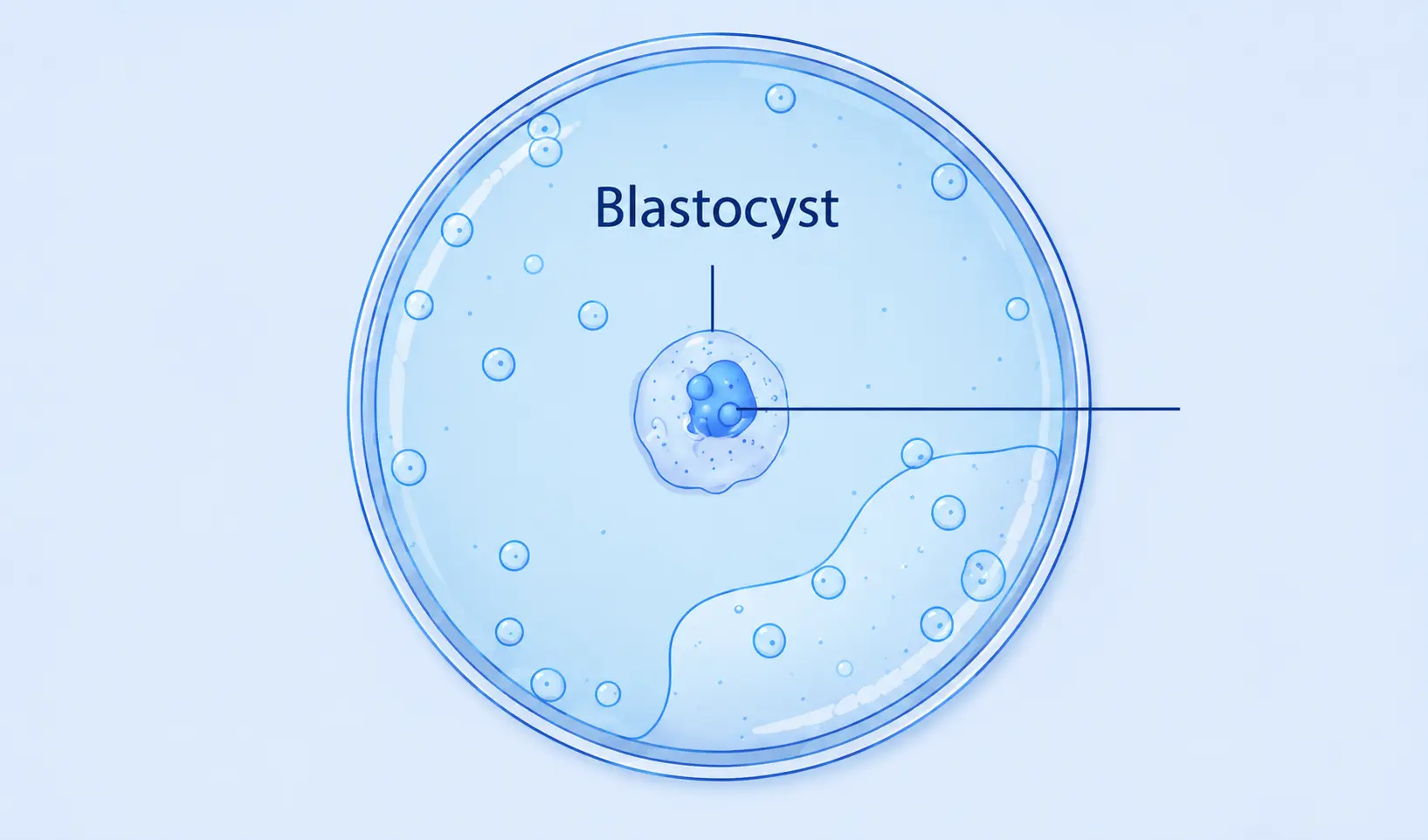

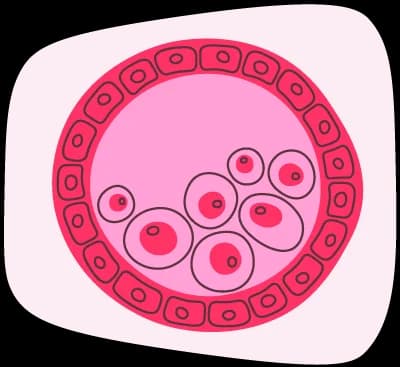
Blastocyst Culture is a technique used in IVF (in vitro fertilization) where embryos are allowed to develop for an extended period in the lab, reaching the blastocyst stage. A blastocyst is a more mature stage of embryo development compared to a cleavage-stage embryo, potentially offering advantages for implantation success.
During implantation, the blastocyst hatches from its outer shell (zona pellucida) to attach to the uterine lining. Assisted hatching techniques can be used to create a small opening in the zona pellucida to potentially aid implantation.
The decision on assisted hatching is typically made by the embryologist based on the specific characteristics of each embryo.

The cost of blastocyst culture varies widely depending on several factors including clinic fees, doctor’s fees, and laboratory fees.
In Delhi, as of 2026, opting for blastocyst culture typically adds an additional ₹20,000 to ₹40,000 to the base cost of IVF.
For a precise and personalized estimate, it is advisable to consult directly with your chosen clinic.
Traditionally, embryo transfer in IVF happened at the cleavage stage (3–5 days after egg retrieval). Blastocyst culture allows for transfer at a later stage (5–6 days).
Blastocyst Transfer: Offers potential advantages like:
Cleavage Stage Transfer: May be preferred in certain situations:

Blastocyst culture offers several potential advantages for couples undergoing IVF: